
 YouTube
 Facebook
 Linkedin
© Copyright 2026 Shenzhen Vodno Technology Co., Ltd All rights reserved. Powered by iwonder.cn

Lithium battery professional builder
Lithium-ion batteries have become the foundation of modern portable energy systems. From electric vehicles and energy storage systems to e-bikes, RC devices, and industrial equipment, lithium battery technology powers countless applications worldwide. Behind every high-performance battery pack lies a highly controlled and precise manufacturing process.
Understanding the lithium ion battery cell manufacturing process helps businesses, engineers, and buyers evaluate battery quality, performance, and safety. Whether you are sourcing rechargeable lithium ion battery cells or designing a custom battery solution, knowing how these cells are produced is essential.
In this article, we will explore the complete lithium-ion battery cell manufacturing process step by step, including raw material preparation, electrode production, cell assembly, formation, testing, and final battery pack integration.
The performance and safety of a lithium-ion battery begin with the quality of its raw materials. Different battery chemistries are designed for different applications, such as electric bicycle batteries, residential solar batteries, and industrial power systems.
The cathode is the positive electrode of the battery and largely determines energy density and performance.
Common cathode materials include:
LFP (Lithium Iron Phosphate) → safer and long cycle life
NMC (Nickel Manganese Cobalt) → high energy density
NCA (Nickel Cobalt Aluminum) → used in high-performance applications
The anode is typically made from graphite or graphite-silicon blends.
Advanced anode materials improve:
Charging speed
Energy density
Cycle life
The electrolyte allows lithium ions to move between the cathode and anode during charging and discharging.
The electrolyte usually consists of:
Lithium salt
Organic solvents
Additives for safety and stability
The separator is a thin porous membrane that prevents direct contact between electrodes while allowing ion transfer.
Separator quality directly affects battery safety and thermal stability.
High-purity materials are critical for producing:
Stable voltage performance
Long cycle life
Safer rechargeable lithium ion battery cell systems
Even minor contamination during manufacturing can reduce battery performance or increase safety risks.
Electrode production is one of the most important stages in the lithium ion battery cell manufacturing process.
The manufacturing process begins by mixing active materials into a slurry.
For the cathode:
Active lithium material
Conductive additives
Binder
For the anode:
Graphite
Conductive carbon
Binder
The slurry must be mixed uniformly to ensure consistent battery performance.
The slurry is coated onto thin metal foil:
Aluminum foil for the cathode
Copper foil for the anode
Precision coating equipment ensures uniform thickness across the electrode surface.
After coating, the electrodes pass through industrial drying ovens to remove solvents and moisture.
Moisture control is extremely important because lithium materials are highly sensitive to water contamination.
The dried electrodes are compressed using rollers in a process called calendering.
This improves:
Electrode density
Surface uniformity
Energy efficiency
Proper calendering enhances battery capacity and conductivity.
Finally, the electrodes are cut into precise dimensions based on the target battery cell design.
This step is especially important for producing:
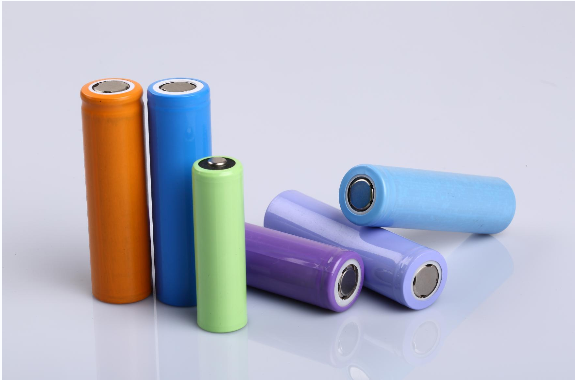
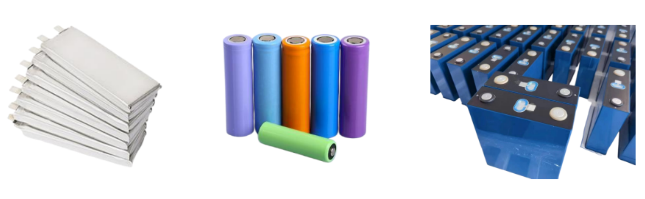
Cylindrical lithium ion battery cells
Pouch cells
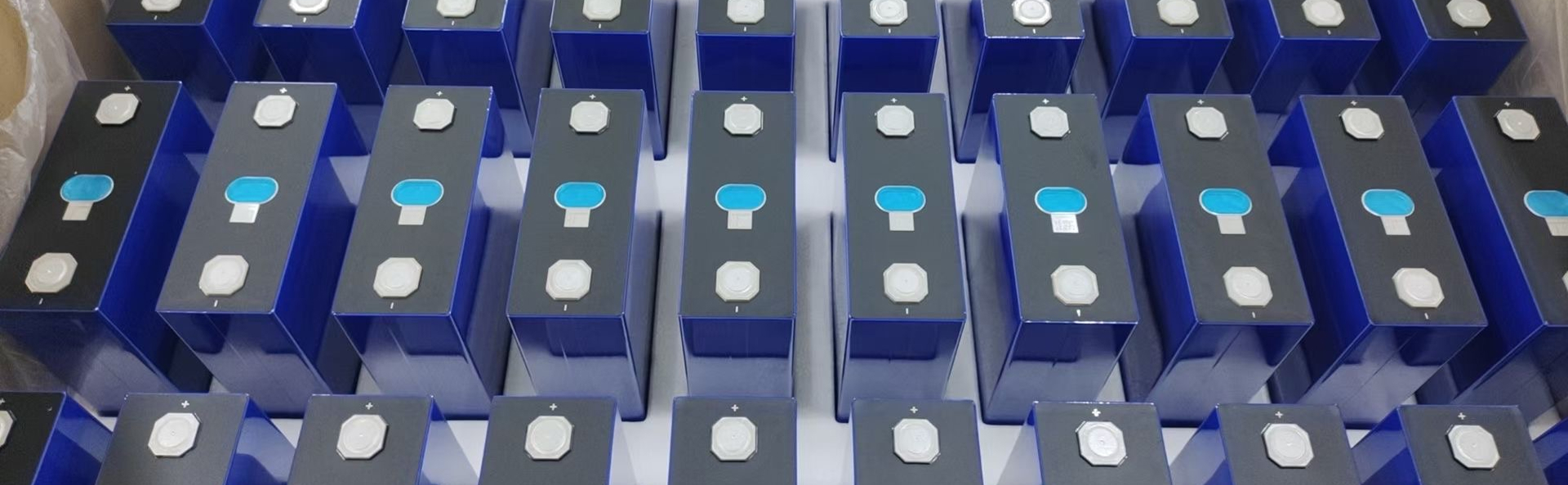
Prismatic cells
Once the electrodes are prepared, the battery cell assembly process begins.
Depending on the battery design, electrodes are either:
Wound into cylindrical cells
Stacked into pouch or prismatic cells
This process creates the internal structure of the battery.
Separators are placed between cathode and anode layers to prevent short circuits.
Any defects during this step can significantly impact battery safety.
Metal tabs are welded to the electrodes to create electrical connections.
High-precision welding ensures:
Low internal resistance
Stable conductivity
Reliable performance
Cylindrical Cells
Examples include:
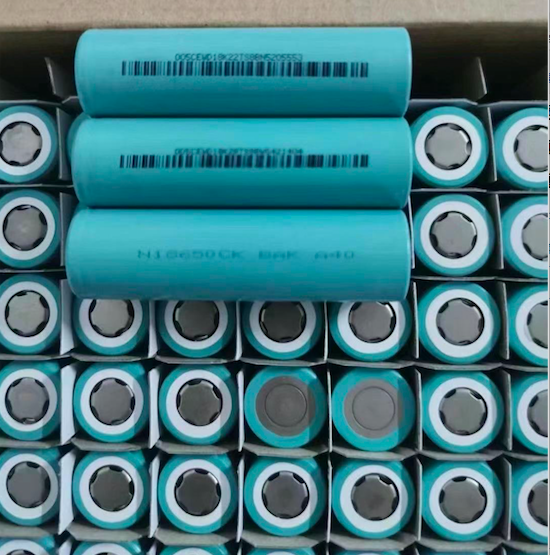
18650 li ion lithium battery cell
21700 cells
These are among the most widely used battery formats due to durability and manufacturing efficiency.
Prismatic Cells
Prismatic cells are rectangular and commonly used in electric vehicles and energy storage systems.
Pouch Cells
Pouch cells are lightweight and flexible, often used in consumer electronics and compact battery systems.
After assembly, the battery cell must be filled with electrolyte and sealed carefully.
Electrolyte is injected into the cell under vacuum conditions to ensure complete penetration into the electrode structure.
This step directly affects:
Ion conductivity
Charging performance
Battery lifespan
Lithium battery manufacturing requires ultra-dry environments because moisture can react with electrolyte materials and reduce battery safety.
Many lithium ion battery cell manufacturers use cleanrooms with controlled humidity below 1%.
The cell is sealed to prevent contamination and electrolyte leakage.
Sealing methods vary depending on the cell type
Laser welding for cylindrical cells
Heat sealing for pouch cells
Proper sealing is essential for long-term reliability.
Formation is one of the most critical stages in the manufacturing process.
Newly assembled cells undergo carefully controlled charging and discharging cycles.
This creates the SEI (Solid Electrolyte Interphase) layer on the anode surface.
The SEI layer stabilizes battery performance and protects the anode.
A stable SEI layer improves:
Cycle life
Safety
Charging efficiency
After formation, cells are stored for a controlled aging period.
This allows manufacturers to identify:
Voltage instability
Self-discharge issues
Manufacturing defects
Only cells that pass strict inspection move to the next stage.
High-quality lithium battery production depends on rigorous testing procedures.
Manufacturers verify the actual capacity of each battery cell.
This ensures cells meet specifications for:
High capacity lithium ion battery cells
Industrial battery systems
Electric bicycle battery packs
Low internal resistance improves efficiency and reduces heat generation.
Cells with abnormal resistance are rejected.
Cells are sorted based on voltage consistency to ensure balanced battery pack assembly.
Safety testing includes:
Overcharge tests
Short-circuit tests
Thermal stability tests
Vibration and impact tests
These tests help ensure battery safety under real-world conditions.
Reliable lithium ion battery cell manufacturers typically comply with:
CE certification
UN38.3 transportation testing
RoHS environmental standards
These certifications are especially important when customers want to buy lithium ion battery cells for commercial applications.
After testing, battery cells are assembled into complete battery packs.
Battery packs use:
Series connections to increase voltage
Parallel connections to increase capacity
Examples include:
12v lithium ion battery cells configurations
18v lithium ion battery cells systems
4 volt lithium ion battery cell applications
A BMS is integrated into the pack to provide:
Overcharge protection
Over-discharge protection
Temperature monitoring
Cell balancing
Lithium-ion battery packs are widely used in:
Electric bicycle battery packs
Residential solar batteries
RC LiPo battery systems
Industrial custom battery pack solutions
The lithium ion battery cell manufacturing process involves highly sophisticated engineering, strict environmental control, and advanced quality management systems. From raw material preparation and electrode production to cell assembly, formation, and testing, every stage directly affects battery safety, reliability, and performance.
Whether used in electric bicycles, RC applications, industrial systems, or residential energy storage, high-quality rechargeable lithium ion battery cells are essential for modern energy solutions.
When businesses or engineers want to buy lithium ion battery cells, selecting experienced and reliable lithium ion battery cell manufacturers is critical to ensuring long-term performance and safety.
Lithium-ion battery cells are manufactured through several stages, including electrode coating, cell assembly, electrolyte filling, formation cycling, aging, and quality testing.
Key materials include lithium cathode materials, graphite anodes, electrolyte solutions, separators, and metal current collectors.
Every step is important, but electrode manufacturing and formation are especially critical for battery performance and safety.
The complete process can take several days to weeks, depending on formation and aging requirements.
Cylindrical cells are round and highly durable, while prismatic cells are rectangular and more space-efficient for large battery systems.
If you are looking for high-quality rechargeable lithium ion battery cell solutions, including 18650 li ion lithium battery cell products, cylindrical lithium ion battery cells, high capacity lithium ion battery cells, and custom lithium battery pack systems, Vodno Battery provides advanced lithium battery solutions for industrial, mobility, and energy storage applications worldwide.