
Battery Energy Storage System (BESS)
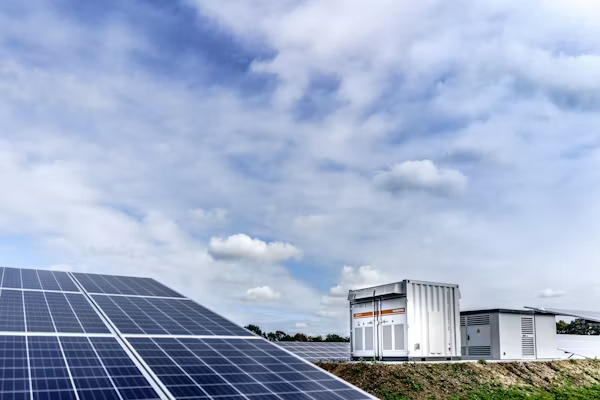
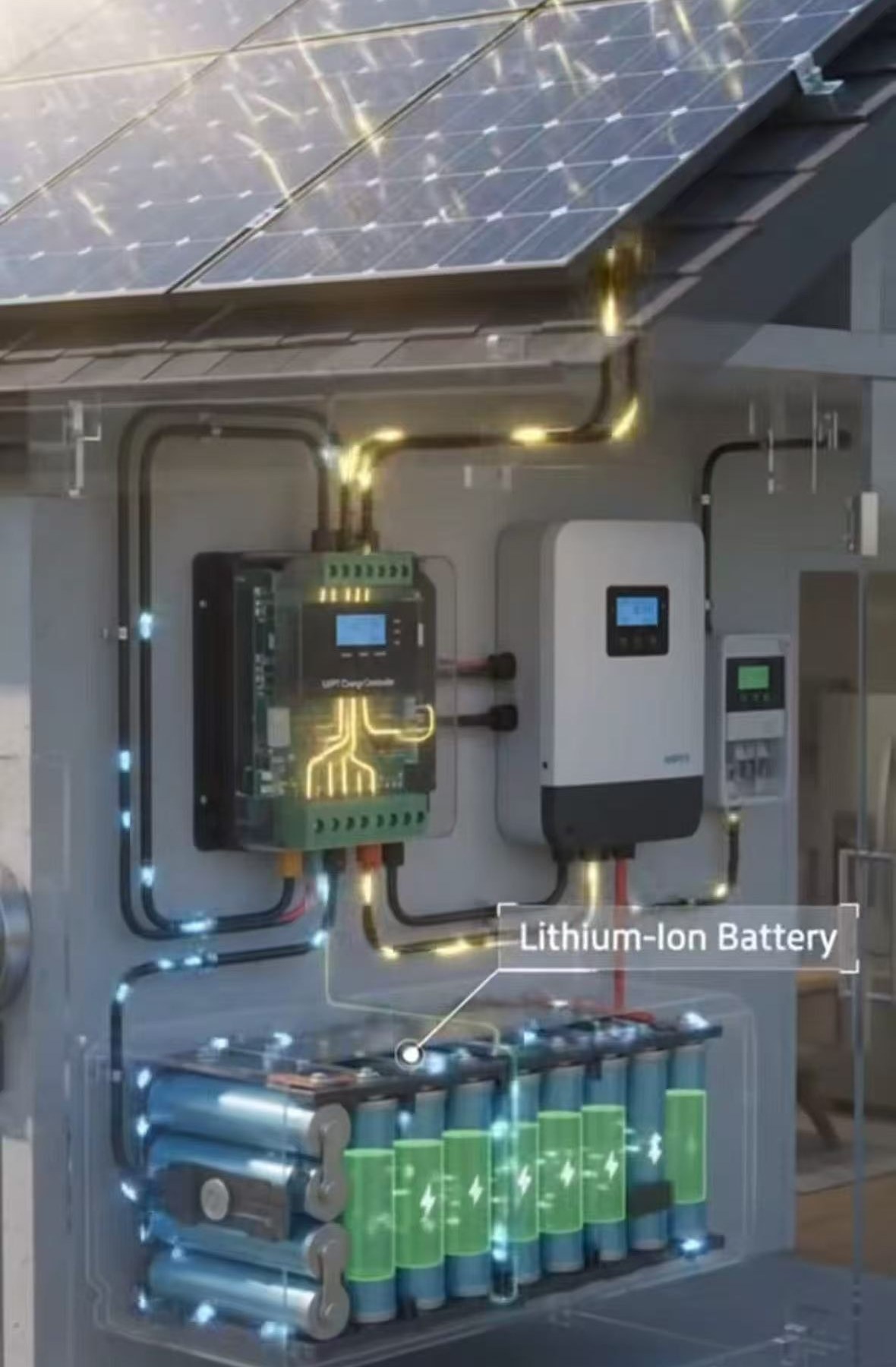
- Designed for residential, commercial and industrial energy storage,
- renewable energy pairing, grid support and backup power,
- and microgrid and off-grid power supply!
| Core Component | Function |
|---|---|
| Battery Pack | Energy storage medium. LiFePO4 is widely used for grid BESS. |
| BMS (Battery Management System) | Monitor cell voltage and temperature, protect against overcharge and over-discharge, and balance cells. |
| PCS (Power Conversion System/Inverter) | Convert between AC from the grid and DC from the battery. |
| HV Cabinet, Transformer, Cooling & Fire Suppression | Auxiliary and safety subsystems. |
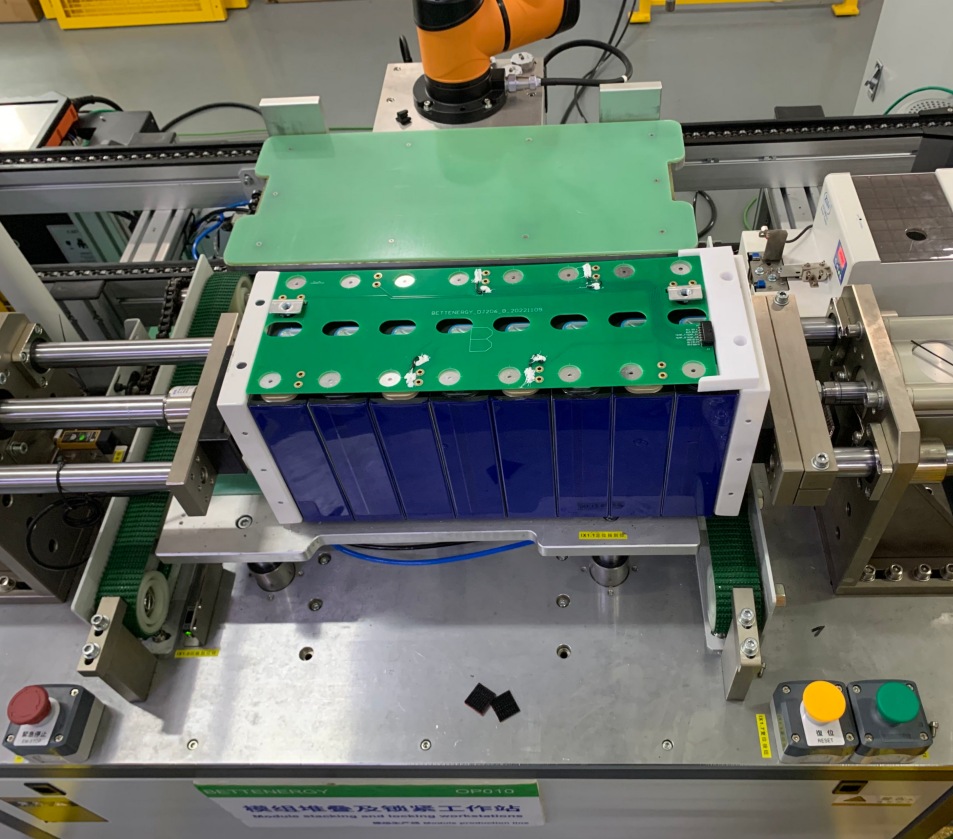
The smallest unit, available in prismatic, pouch or cylindrical formats. Prismatic LFP is dominant for container BESS.
Multiple cells assembled together with sampling wires and thermal pads.
Multiple modules with slave BMS, fixed in a cabinet or container.
Multiple racks managed by a master BMS.
Battery racks combined with BMS, cooling and fire suppression.
| Battery | Safety | Cycle Life | Energy Density | Cost | Main BESS Application |
|---|---|---|---|---|---|
| LFP | ★★★★★ | 6000–12000 | Medium | Low | Utility / C&I (dominant) |
| NMC | ★★★☆☆ | 3000–6000 | High | Medium | Compact storage |
| LTO | ★★★★★ | >20000 | Low | High | Fast response grid services |
| Lead-acid | ★★★★☆ | 500–1500 | Very low | Very low | Small backup only |
| Vanadium Flow | ★★★★★ | >10000 | Low | High | Long-duration storage |
| Sodium-ion | ★★★★☆ | 4000–8000 | Medium | Falling | New pilot projects |
Support daily transportation across fairways, clubs and course facilities with reliable, long-lasting power.
Provide consistent power for guest transportation, maintenance carts and service vehicles across resort properties.
Power neighborhood transportation, security patrols and utility carts for convenient everyday mobility.
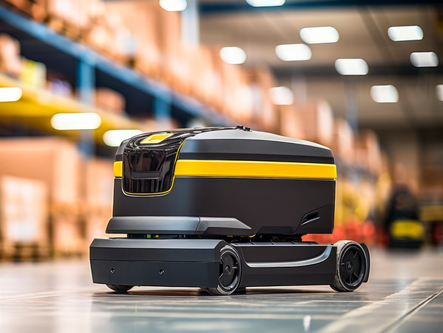
Support continuous operation for park patrol, facility management, shuttle and other high-frequency fleet applications.
Deliver dependable power for private golf carts used for short-distance transportation and recreational activities.
![]() |
| 48V LiFePO4 Golf Cart Battery |
| Specification | Details |
|---|---|
| Nominal Voltage | 51.2V |
| Full Charge Voltage | 58.4V |
| Discharge Cut-off Voltage | 40V |
| Nominal Capacity | 60Ah/80Ah/100Ah/105Ah |
| Rated Energy | 3.07kWh/4.10kWh/5.12kWh/5.38kWh |
| Standard Charge Current | 0.5C |
| Max Continuous Discharge Current | 100A–120A |
| Peak Discharge Current | 180A (3s) |
| Cycle Life | 4000–6000 cycles @ 0.5C |
| Charging Time | 3–4 hours with matched lithium charger |
| Operating Temperature | Charge: 0°C–45°C; Discharge: -20°C–60°C |
| Protection System | Smart BMS with full protection and temperature monitoring |
| Compatibility | Club Car, EZGO, Yamaha, ICON and most 48V golf carts |
| Specification | Electric Forklift | AGV Vehicle | Logistics Vehicle | Golf Cart |
|---|---|---|---|---|
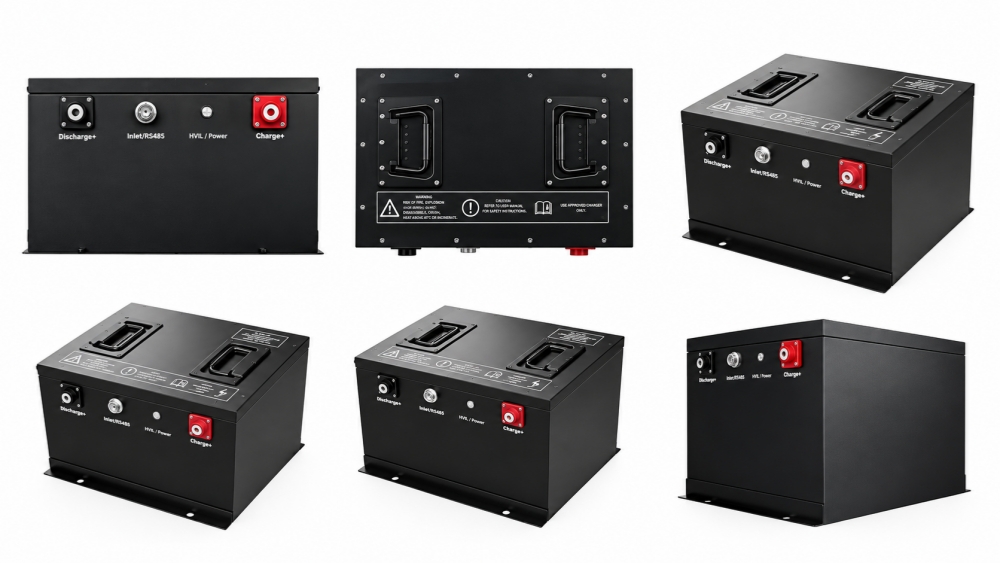
| Battery Model | 51.2V 195Ah | 51.2V 170Ah | 51.2V 100Ah | 51.2V 120Ah |
| Nominal Voltage | 51.2V | 51.2V | 51.2V | 51.2V |
| Rated Capacity | 194.4Ah | 169.2Ah | 100.8Ah | 120Ah |
| Communication | CAN | RS485 | CAN | CAN |
| Energy | 9953Wh | 8663Wh | 5160Wh | 6144Wh |
| Size | 660×400×410mm | 645×365×275mm | 558×473×292mm | 900×350×200mm |
| Charge Voltage | 57.6±0.15V | 57.6±0.15V | 57.6±0.15V | 57.6±0.15V |
| Discharge End Voltage | 40V | 40V | 40V | 40V |
| Charge Current | ≤100A | ≤40A | ≤40A | ≤24A |
| Discharge Current | 200A | 80A | 100A | 60A |
| Protection | Overcharge, Overdischarge, Temperature, Balance, Communication | |||

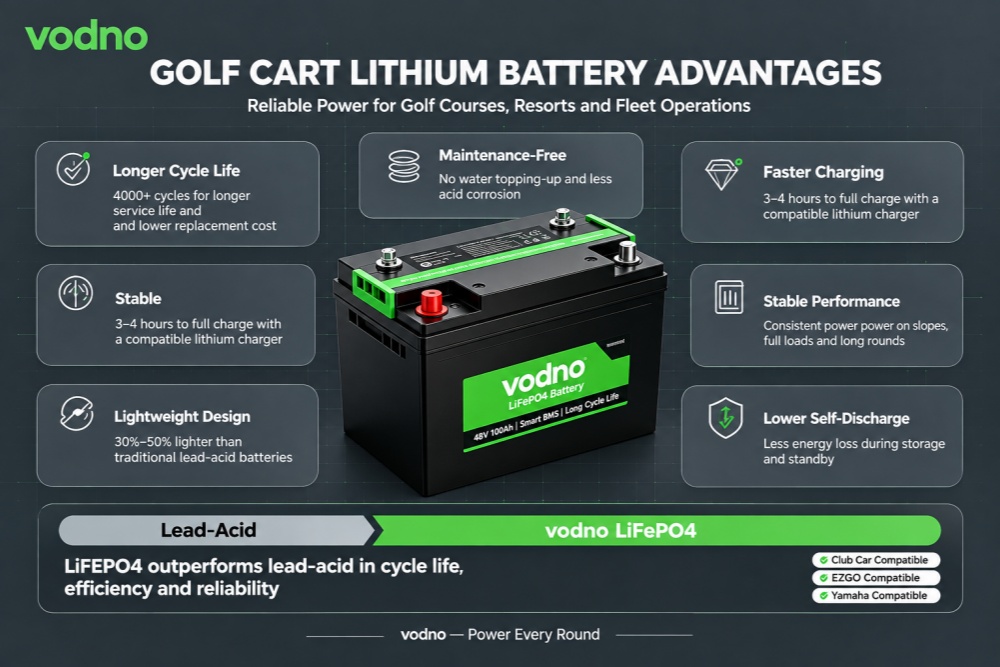
4000–6000 cycles for long-term golf cart operation
Shorter charging time helps reduce vehicle downtime
No routine battery maintenance for easier daily use
Intelligent protection with temperature monitoring