
Lithium battery professional builder
Many homeowners considering solar energy often ask: how many solar batteries are needed to power a house and what capacity of solar batteries for home use is actually required. The answer is not fixed, as it depends on household electricity consumption, required backup duration, and overall system design.
Solar batteries for home energy storage play a key role in modern residential solar systems. They store excess electricity generated during the day and supply power when solar production is low or during grid outages, helping improve energy independence and energy stability.
In this article, we will explain how to determine the right number of solar batteries for a home, the key factors that influence system sizing, and how to choose a suitable solar battery solution based on real household energy needs.
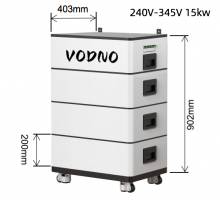
In most residential solar systems, the number of batteries needed to power a house typically ranges from 1 to 4 solar batteries, depending on household electricity usage, backup duration, and battery capacity.
|
Home Type |
Typical Battery Needs |
|
Small home |
1 battery |
|
Medium home |
2-3 batteries |
|
Large home |
3-4+ batteries |
In general, the total number of solar batteries for home use is determined by household electricity demand and required backup time.
The actual system design depends on several technical factors beyond home size, including daily electricity consumption, backup time requirement, battery capacity (kWh), and depth of discharge (DoD). Higher energy usage and longer autonomy increase the total storage requirement, while larger-capacity batteries and higher usable DoD can reduce the overall number of batteries needed.
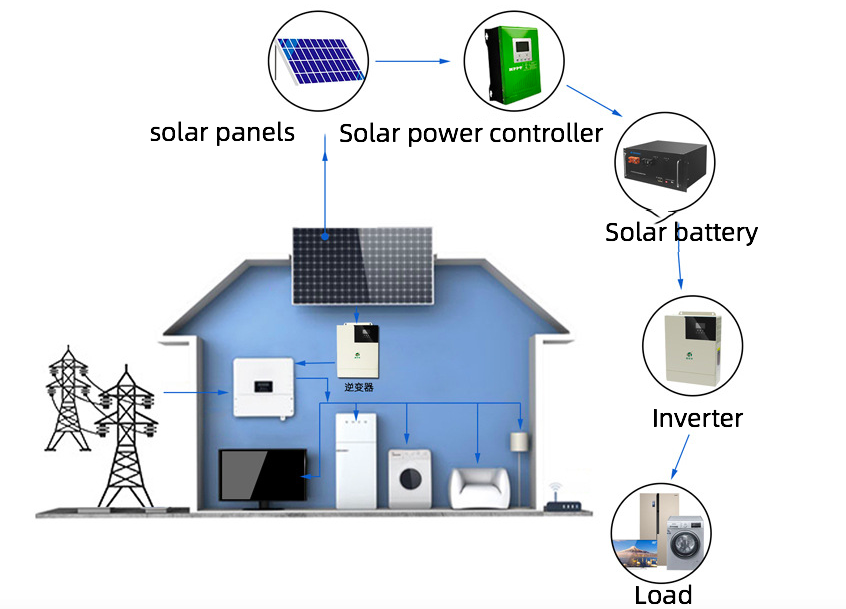
Solar batteries for home energy systems store electricity generated by solar panels and provide stable power supply when solar energy is unavailable, ensuring continuous energy use throughout the day and night.
Solar panel charging during the day: Solar panels generate electricity under sunlight, with excess energy stored in the battery system.
Energy storage in batteries: The stored energy is saved for later use when solar production is low or unavailable.
Nighttime power supply: The battery releases stored energy to power household appliances during the night or peak demand.
Grid-tied vs off-grid usage: Grid-tied systems work with the utility grid for backup and balance, while off-grid systems rely entirely on batteries. The same principle applies in smaller applications such as solar batteries for solar lights, where daytime energy is stored for nighttime lighting.
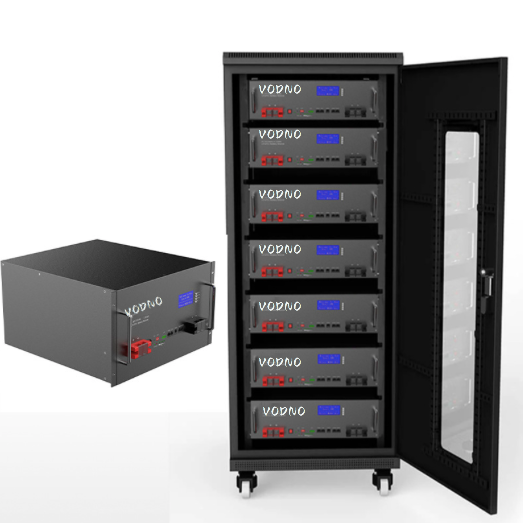
The number of solar batteries needed for a house can be estimated using a simple formula based on daily energy consumption and usable battery capacity.
Formula:
Number of Batteries=Daily Energy Consumption(kWh)/Usable Battery Capacity(kWh)
Example calculation:
If a household uses 20 kWh per day and each battery provides 5 kWh of usable capacity, the system would require about 4 batteries (20/5=4).
This calculation method is also widely applied in solar batteries for commercial use, where energy demand is higher and system sizing must account for continuous operation and peak load requirements.
LiFePO4 (Lithium Iron Phosphate) batteries are widely used in residential and commercial solar energy storage systems due to their stable performance and long service life.
Long cycle life: LiFePO4 batteries can withstand a high number of charge and discharge cycles, making them suitable for long-term energy storage applications.
High safety: They offer excellent thermal and chemical stability, reducing the risk of overheating and improving overall system safety.
Deep discharge capability: These batteries allow a higher usable capacity, enabling more efficient use of stored energy.
Stable performance: Output remains consistent over time, ensuring reliable energy supply for solar storage systems throughout their lifespan.
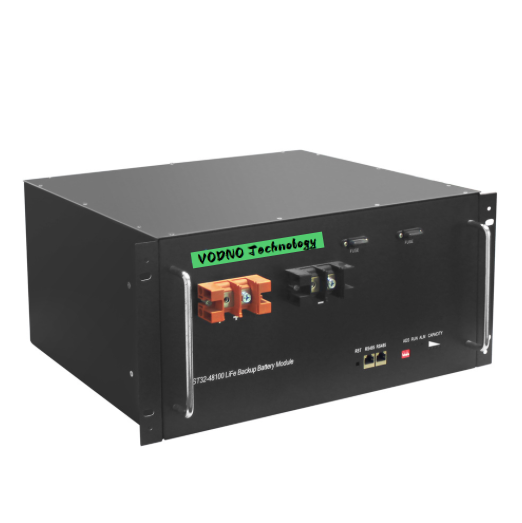
Choosing the right solar battery system starts with selecting the appropriate capacity based on your household energy consumption and backup requirements. A properly sized system ensures stable power supply and efficient performance in solar batteries for home solar systems.
In addition, inverter compatibility is essential to ensure the battery system can integrate smoothly with your existing solar setup. System scalability should also be considered, allowing additional batteries to be added in the future as energy needs grow. Planning for future energy demand helps ensure the system remains efficient and cost-effective over the long term.
In conclusion, the number of solar batteries needed to power a house depends on household electricity consumption, backup time requirements, and battery capacity. In most residential applications, systems typically require between 1 and 4 batteries, but the exact configuration should always be based on real energy usage and system design.
A proper understanding of battery sizing, system calculation, and key influencing factors helps ensure better performance, higher efficiency, and long-term reliability. Choosing the right battery capacity and system setup is essential for achieving stable and consistent solar energy supply.
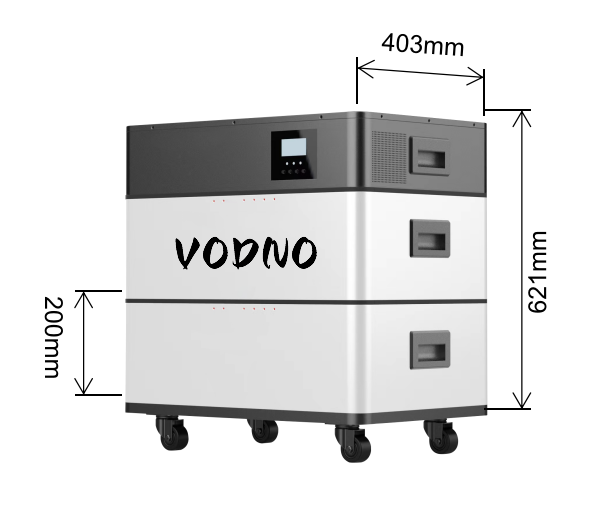
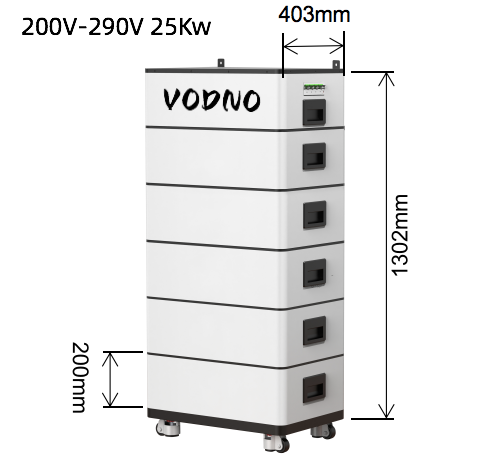
Vodno Battery provides reliable and high-performance solar battery solutions designed for residential and commercial energy storage applications. With advanced LiFePO4 technology and scalable system designs, Vodno Battery supports efficient energy storage solutions that meet different household and project requirements.


 YouTube
 Facebook
 Linkedin